
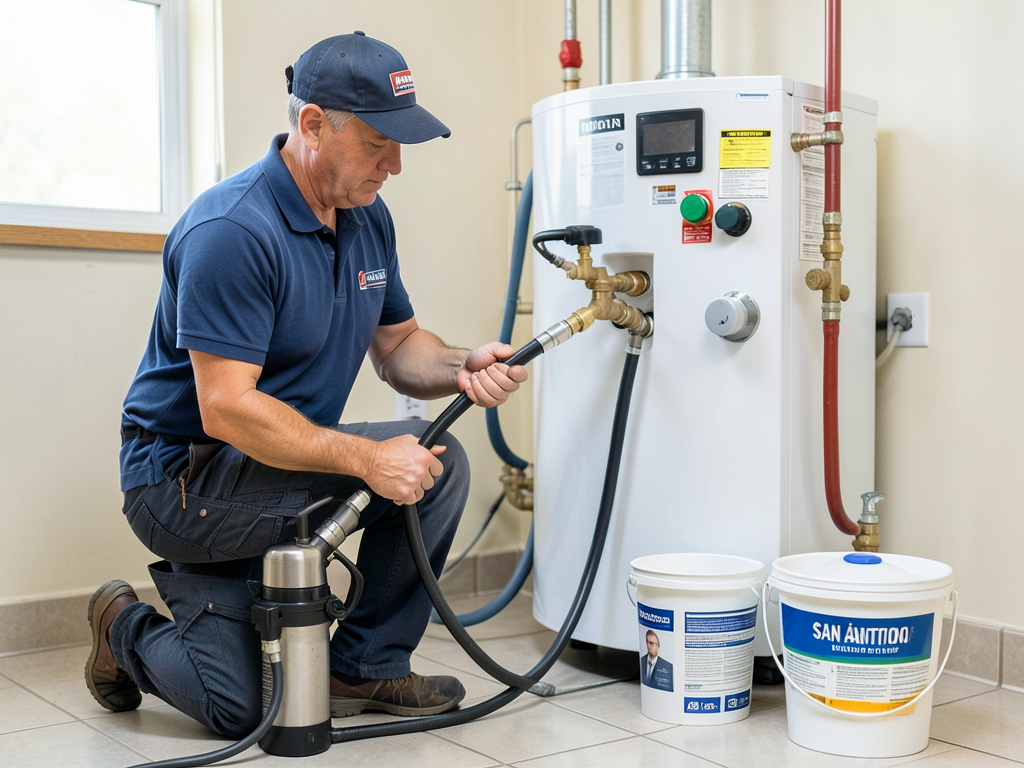
The Right Way to Flush Your Tankless Water Heater to Prevent San Antonio Scale Buildup
Your tankless water heater works harder in San Antonio than almost anywhere else in the country. The city’s water from the Edwards Aquifer carries 15-20 grains per gallon of dissolved minerals—that’s nearly double the national average. These minerals coat your heat exchanger like concrete, reducing efficiency by up to 30% and eventually causing complete failure. The only way to prevent this is annual flushing with the right equipment and chemicals. Edwards Aquifer Authority.
Most homeowners don’t realize their tankless unit needs maintenance until they see error codes like LC or LE flashing on the display. By then, scale has already built up inside the heat exchanger. You might notice longer wait times for hot water, fluctuating temperatures, or a clicking sound when the unit fires up. These are all signs that mineral deposits are choking your system.. Read more about Dealing With the Hard Water That’s Ruining Stone Oak Appliances.
The flushing process takes about 90 minutes and requires isolation valves, a submersible pump, food-grade citric acid or commercial descaler, and specific flow rates to work properly. DIY attempts with vinegar often fail because the acid concentration is too weak and the circulation time too short to break down hardened scale. Professional-grade equipment circulates the solution at 2-3 gallons per minute for 45-60 minutes, dissolving years of buildup. Safe and Professional Gas Line Repairs for Hollywood Park Residents.
Rinnai, Navien, and Noritz all recommend professional descaling every 12-24 months in San Antonio’s water conditions. Skipping maintenance voids warranties and leads to heat exchanger replacement—a $800-$1,200 repair that could have been prevented. The cost of professional flushing typically runs $150-$300, making it a smart investment compared to emergency repairs or early replacement. Emergency San Antonio Plumbers Who Actually Answer the Phone at Night.
During a professional flush, technicians also check for gas line leaks, verify proper venting, test the pressure relief valve, and inspect electrical connections. They’ll record the unit’s performance data and provide a maintenance report. This comprehensive service ensures your system runs efficiently and safely through San Antonio’s extreme temperature swings, from summer heat that strains cooling systems to winter cold snaps that can freeze pipes.
Don’t wait for your tankless water heater to fail. Call (210) 374-7773 today to schedule your professional flush before scale buildup causes expensive damage.. Read more about Why your water smells like rotten eggs in the Brooks Base area.
San Antonio’s Hard Water Problem
San Antonio’s water comes from the Edwards Aquifer, a limestone formation that naturally dissolves calcium and magnesium into the water supply. The hardness level in most neighborhoods ranges from 15 to 20 grains per gallon, with some areas near Helotes and Bandera Road testing even higher. This mineral content is what makes San Antonio’s water taste good but destroys plumbing components over time.
The heat exchanger in your tankless water heater is particularly vulnerable. Water passes through narrow channels at temperatures around 140-180 degrees Fahrenheit, causing minerals to precipitate out and stick to metal surfaces. A thin layer of scale acts like insulation, forcing the burner to work harder and use more gas. Over months, this buildup can reduce heat transfer efficiency by 25-40%, directly increasing your utility bills.
Local water utilities like SAWS (San Antonio Water System) publish annual water quality reports showing hardness levels by neighborhood. Homes in Stone Oak, Alamo Heights, and the Medical Center area typically see the highest mineral concentrations. The problem compounds in older homes with galvanized steel pipes that already have internal corrosion, creating perfect conditions for scale to accumulate rapidly. SAWS (San Antonio Water System).
San Antonio’s climate adds another layer of stress. Summer temperatures often exceed 100 degrees, causing thermal expansion in pipes and joints. When cold water suddenly flows through a hot heat exchanger, the temperature shock can crack already-weakened scale deposits, sending chunks through your plumbing system. This is why professional inspection includes checking for both scale and structural integrity.
According to the Texas Water Development Board, the Edwards Aquifer Authority regulates water quality across seven counties. Their monitoring shows that while treatment plants remove many contaminants, they don’t reduce hardness since minerals aren’t considered harmful to drink. This means every tankless unit in San Antonio faces the same scale challenge regardless of the water source.
Commercial buildings and multi-family properties in downtown San Antonio often install whole-house water softeners to combat this issue. For residential tankless systems, however, the most cost-effective solution remains regular professional flushing combined with water-saving habits like fixing drips promptly and using low-flow fixtures to reduce mineral exposure. Commercial Kitchen Plumbing.
Signs Your Tankless Water Heater Needs Descaling
Scale buildup doesn’t happen overnight, but the warning signs are specific and progressive. The first indicator is usually a drop in hot water temperature. You might notice that showers that once stayed hot for 15 minutes now turn lukewarm after 5-7 minutes. This happens because mineral deposits insulate the heat exchanger, preventing it from transferring enough heat to the water. Early Warning Signs of a Slab Leak in Your Alamo Heights Home.
Another early sign is increased wait time for hot water. Scale narrows the internal passages, reducing flow rate. What used to take 15 seconds now takes 45 seconds or more. You might hear a clicking or popping sound when the unit starts up—this is actually small pieces of scale breaking loose and hitting the sides of the heat exchanger.
Modern tankless water heaters have built-in diagnostics that display error codes when performance drops below certain thresholds. Rinnai units show LC (lime check) or LE (low flow) codes. Navien displays 515B or 516B for scale-related issues. Noritz shows LC or 11 for ignition problems that can be caused by restricted flow from scale.
Physical symptoms include reduced water pressure at all fixtures, not just the hot side. Since scale affects the entire system, you might notice your washing machine takes longer to fill or your dishwasher doesn’t clean as well. The unit may also cycle on and off more frequently as it struggles to maintain temperature with reduced efficiency.
Gas consumption often increases without explanation. If your monthly utility bill jumps 15-20% during winter months when hot water usage remains constant, scale buildup is likely forcing your burner to run longer to achieve the same temperature rise. This hidden cost adds up quickly—an extra $20-30 per month translates to $240-360 annually.
Visual inspection reveals another clue. Check the water from your hot tap after it hasn’t been used for several hours. If it appears cloudy or has a white, chalky residue when dry, you’re seeing dissolved minerals that have already begun coating your heat exchanger. This is especially noticeable in areas with hard water like Helotes, Fair Oaks Ranch, and parts of Schertz.
The most serious sign is complete system shutdown. When scale completely blocks heat exchanger passages, the unit can’t detect adequate water flow and shuts down for safety. At this point, professional cleaning might restore function, but the damage to internal components often requires replacement rather than repair. How We Repair Sewer Lines in King William Without Destroying the History.
The Professional Tankless Water Heater Flush Process
Professional flushing follows a specific sequence that ensures complete scale removal without damaging your system. The process starts with isolating the water heater using dedicated isolation valves—these are essential safety features that every tankless installation should include. Without them, you can’t flush the system without shutting off water to your entire house.
Technicians connect a submersible pump to the isolation valves using food-grade hoses. The pump circulates a descaling solution through the heat exchanger in reverse of normal flow direction. This backwashing action helps dislodge scale from areas where it typically builds up most heavily. The solution is usually a citric acid-based cleaner mixed at specific concentrations—too weak and it won’t work, too strong and it can damage seals.
During circulation, the solution’s pH and temperature are monitored continuously. Most descalers work best between 100-120 degrees Fahrenheit. The circulation runs for 45-60 minutes, with technicians checking flow rate every 15 minutes. A properly functioning system should maintain 2-3 gallons per minute during flushing. If flow drops, it indicates severe scale buildup requiring extended cleaning time.. Read more about Choosing Between Salt and Salt-Free Water Softeners in Cibolo Canyons.
After the main flush, the system undergoes a neutralization phase where clean water circulates to remove all chemical residue. This step is critical—any descaler left in the system can corrode internal components over time. Technicians verify pH neutrality using test strips before reconnecting the unit to your home’s plumbing.
The final phase involves performance testing. Technicians verify that the unit achieves its rated temperature rise (typically 45-50 degrees Fahrenheit) at maximum flow rate. They check for proper combustion by measuring carbon monoxide levels in exhaust gases. They also inspect venting for blockages and test all safety controls including the flame sensor and overheat cutoff.
Throughout the process, technicians document findings including initial error codes, flow rates before and after cleaning, gas pressure readings, and any visible scale deposits removed. This documentation helps track your system’s condition over time and can be valuable for warranty claims or future diagnostics.
Professional equipment includes items most homeowners don’t own: digital manometers for pressure testing, combustion analyzers for gas safety, and thermal imaging cameras to verify even heating across the heat exchanger. These tools ensure the flush is thorough and that no underlying issues go undetected.
The entire process typically takes 90-120 minutes for a standard residential unit. Commercial systems or those with severe buildup may require 3-4 hours. The investment pays off through restored efficiency, prevented breakdowns, and extended equipment life—often adding 3-5 years to a heat exchanger that would otherwise fail prematurely.
DIY vs Professional Tankless Water Heater Flushing
Many homeowners consider DIY flushing to save money, but the risks often outweigh the savings. The most common mistake is using white vinegar instead of commercial descaler. While vinegar is food-safe and readily available, its 5% acetic acid concentration is too weak to dissolve hardened scale effectively. You’d need to circulate vinegar for 8-10 hours to achieve results comparable to 60 minutes with professional-grade citric acid.
Another frequent error is inadequate circulation time or flow rate. Without a proper pump, gravity-fed systems circulate too slowly to create the turbulence needed to break up scale deposits. Many DIYers also skip the neutralization phase, leaving acidic residue that continues to corrode internal components long after the flush is complete.
Isolation valves are another critical component most DIYers lack. These specialized valves allow you to isolate the water heater without shutting off water to your entire house. Without them, you risk flooding if a connection fails during the flush process. Professional installations include these valves as standard safety equipment.
Warranty considerations also favor professional service. Most manufacturers require proof of professional maintenance to honor heat exchanger warranties. DIY attempts can void coverage, leaving you responsible for expensive repairs. Documentation from certified technicians provides the paper trail manufacturers demand for warranty claims.. Read more about Deciding Whether to Repair or Replace Your Aging Kirby Water Heater.
Safety represents another major difference. Professional technicians are trained to handle gas connections, electrical components, and high-temperature systems safely. They know how to test for gas leaks, verify proper venting, and ensure all safety controls function correctly after service. DIY attempts risk carbon monoxide leaks, gas explosions, or electrical fires.
The cost comparison often surprises homeowners. Professional flushing typically costs $150-300, while DIY requires purchasing or renting a pump ($50-100), hoses ($20-40), descaler ($30-50), and test equipment ($100+). When you factor in your time, the risk of mistakes, and potential damage from improper cleaning, professional service often costs less overall.
Professional service also includes diagnostic testing most DIYers can’t perform. Technicians measure gas pressure, check combustion efficiency, verify electrical connections, and inspect venting—all critical for safe operation. They can identify developing problems before they cause system failure, potentially saving you from emergency service calls during inconvenient times.
For San Antonio’s hard water conditions, annual professional flushing isn’t just recommended—it’s essential for protecting your investment. The city’s mineral content makes tankless systems work harder than in other regions, and professional maintenance ensures they operate efficiently and safely throughout their designed lifespan.
Local Hard Water Statistics and Impact
San Antonio’s water hardness varies by neighborhood but consistently ranks among the highest in Texas. The Edwards Aquifer Authority reports that most areas receive water with 15-20 grains per gallon of hardness, with some pockets near Helotes and Bandera Road testing above 25 grains per gallon. This compares to the national average of 7-10 grains per gallon.
The impact on tankless water heaters is measurable and significant. A study by the American Society of Plumbing Engineers found that hard water can reduce water heater efficiency by 25-30% within the first two years of operation. In San Antonio’s conditions, this efficiency loss often occurs within 12-18 months without proper maintenance.
Local water quality reports from SAWS show that calcium and magnesium concentrations in San Antonio’s water supply have remained relatively stable over the past decade. The Edwards Aquifer’s limestone geology ensures a consistent mineral content, meaning today’s tankless installations face the same scale challenges as those installed 10 years ago.
Different tankless brands handle San Antonio’s water conditions differently. Rinnai units typically show scale buildup first in the heat exchanger’s bottom section where water enters coldest. Navien systems often experience scale accumulation around the flow sensor, causing flow-related error codes. Noritz units frequently develop scale on the flame rod, causing ignition failures.
The economic impact extends beyond individual homeowners. The Texas Water Development Board estimates that hard water scale costs Texas residents over $2 billion annually in increased energy costs, appliance replacement, and plumbing repairs. San Antonio’s share of this cost is proportionally higher due to the region’s extreme water hardness.
Commercial properties in San Antonio often invest in water softening systems to protect their equipment. Restaurants, hotels, and healthcare facilities near the Medical Center frequently install whole-building softeners that reduce hardness to 1-2 grains per gallon. For residential tankless systems, however, the cost-benefit analysis still favors regular flushing over softening.
Climate factors compound the problem. San Antonio’s hot summers mean higher cold water temperatures entering the heater, reducing the temperature rise needed and minimizing scale formation. However, winter cold snaps can cause dramatic temperature swings that stress already-scaled components, leading to seasonal failure patterns that technicians recognize.
Understanding these local conditions helps explain why San Antonio homeowners need more frequent maintenance than those in other regions. While manufacturers might recommend 24-month intervals in soft water areas, San Antonio’s conditions often require 12-month service to maintain efficiency and prevent premature failure.
Cost-Benefit Analysis of Professional Maintenance
The economics of tankless water heater maintenance in San Antonio strongly favor professional service. A typical professional flush costs $150-300 and takes 90-120 minutes. Compare this to heat exchanger replacement at $800-1,200, or complete unit replacement at $2,000-4,000, and the maintenance investment becomes obvious.
Efficiency losses from scale buildup also carry hidden costs. A 25% efficiency reduction means your tankless heater uses 25% more gas to produce the same amount of hot water. If your typical monthly gas bill for water heating is $30, scale could be adding $7.50 monthly—$90 annually—just in wasted energy.
Beyond direct costs, there’s the inconvenience factor. A failed water heater often means cold showers, missed work for repairs, and emergency service premiums. Professional maintenance schedules these costs during convenient times and prevents the stress of unexpected breakdowns.
Many homeowners worry about ongoing maintenance costs, but consider this: a tankless water heater typically lasts 15-20 years with proper care. Without maintenance in San Antonio’s hard water, that lifespan might drop to 8-10 years. The difference represents thousands of dollars in premature replacement costs.
Professional maintenance also includes safety inspections that DIY service can’t match. Technicians check for gas leaks, verify proper venting, test electrical connections, and ensure all safety controls function correctly. These inspections can prevent dangerous situations like carbon monoxide leaks or gas explosions.
Some homeowners consider water softeners as an alternative to regular flushing. While softeners eliminate scale, they add ongoing costs for salt, maintenance, and potential plumbing issues from the softening process itself. For most San Antonio homeowners, the combination of occasional professional flushing and good water habits proves more cost-effective.
The maintenance schedule itself represents a cost-saving strategy. Annual service prevents the gradual efficiency losses that force your system to work harder over time. By maintaining peak performance, you avoid the compounding costs of reduced efficiency, premature component wear, and unexpected failures.
Professional technicians also provide valuable documentation of your system’s condition over time. This history helps identify developing problems early, when they’re less expensive to fix. It also provides proof of proper maintenance for warranty claims, potentially saving thousands in repair costs over your system’s lifetime.
Frequently Asked Questions
How often should I flush my tankless water heater in San Antonio?
Annual flushing is recommended for most San Antonio homes due to the region’s high mineral content. Homes with extremely hard water (above 20 grains per gallon) or high hot water usage might need service every 6-9 months. Professional technicians can test your water hardness and usage patterns to recommend the optimal schedule.
Can I use vinegar instead of commercial descaler?
While vinegar is food-safe and readily available, it’s too weak to effectively dissolve hardened scale in tankless water heaters. Professional-grade citric acid solutions work 10-15 times faster and more completely. Vinegar might work for very light scale in soft water areas, but San Antonio’s mineral content requires stronger chemicals for effective cleaning.
Will regular flushing lower my energy bills?
Yes, maintaining a clean heat exchanger can improve efficiency by 25-30%, directly reducing gas consumption. If your unit has significant scale buildup, you might see immediate utility bill reductions of 15-20% after professional cleaning. The savings typically offset the maintenance cost within 12-18 months.
What happens if I skip maintenance for several years?
Scale buildup becomes increasingly difficult to remove over time. After 3-4 years without service, scale can completely block heat exchanger passages, causing system failure. At this point, professional cleaning might not restore function, and you’ll likely need expensive component replacement or complete unit replacement.
Are isolation valves really necessary?
Yes, isolation valves are essential safety equipment for tankless water heaters. They allow you to service the unit without shutting off water to your entire house and prevent flooding if a connection fails during maintenance. Any professional installation should include these valves as standard equipment.
How long does professional flushing take?
A standard residential flush typically takes 90-120 minutes. This includes system isolation, chemical circulation, neutralization, and performance testing. Units with severe scale buildup or those that haven’t been serviced in years might require 3-4 hours for complete cleaning.
Can hard water damage other plumbing fixtures?
Absolutely. Hard water scale affects everything from showerheads to dishwashers to coffee makers. You might notice white, chalky deposits on faucets, reduced flow from aerators, or spots on dishes after washing. While tankless flushing addresses the water heater specifically, whole-house water quality affects all your plumbing components.
What’s the difference between flushing and descaling?
Flushing typically refers to removing loose debris and sediment, while descaling specifically targets mineral buildup. Professional tankless service includes both—initial flushing to remove loose material, followed by chemical descaling to dissolve hardened scale deposits from the heat exchanger surfaces.
Do all tankless brands require the same maintenance?
While the basic process is similar, different brands have specific requirements. Rinnai units often need particular descaling solutions, Navien systems have unique flow sensor considerations, and Noritz units require specific pressure settings. Professional technicians know these brand-specific requirements and follow manufacturer guidelines.
Is professional flushing worth the cost?
Considering that heat exchanger replacement costs $800-1,200 and complete unit replacement runs $2,000-4,000, annual maintenance at $150-300 is excellent insurance. The efficiency improvements, prevented breakdowns, and extended equipment life typically provide 300-500% return on investment over your system’s lifetime.
Protect Your Investment with Professional Maintenance
Your tankless water heater represents a significant investment in home comfort and efficiency. In San Antonio’s hard water conditions, that investment requires protection through regular professional maintenance. The cost of annual flushing pales compared to emergency repairs, efficiency losses, and premature replacement that result from neglect.
Professional technicians bring expertise, proper equipment, and safety protocols that DIY attempts can’t match. They diagnose developing problems before they cause system failure, verify safe operation through comprehensive testing, and provide documentation that protects your warranty coverage.
Don’t wait for error codes, cold showers, or complete system failure to prompt action. Scale buildup happens gradually but accelerates over time, making early intervention critical. A simple phone call today can prevent expensive emergency repairs tomorrow.
Call (210) 374-7773 today to schedule your professional tankless water heater flush. Our experienced technicians serve all San Antonio neighborhoods and understand the specific challenges our local water conditions create. We’ll restore your system’s efficiency, verify safe operation, and provide the documentation you need for warranty protection.
Regular maintenance isn’t just about preventing problems—it’s about maximizing your investment and ensuring reliable hot water when you need it most. Make the call today and enjoy peace of mind knowing your tankless system is protected against San Antonio’s challenging water conditions.
{
“@context”: “https://schema.org”,
“@type”: “BlogPosting”,
“headline”: “The Right Way to Flush Your Tankless Water Heater to Prevent San Antonio Scale Buildup”,
“description”: “San Antonio’s hard water destroys tankless water heaters. Learn the professional flush process, error codes, and why annual maintenance prevents costly heat exchanger failure.”,
“wordCount”: 3500,
“datePublished”: “2026-03-08T10:27:00.000Z”,
“dateModified”: “2026-03-08T10:27:00.000Z”,
“inLanguage”: “en-US”,
“mainEntityOfPage”: {
“@type”: “WebPage”,
“@id”: “https://alphaplumbingsanantonio.com”
},
“publisher”: {
“@type”: “LocalBusiness”,
“name”: “Alpha Plumbing San Antonio”,
“url”: “https://alphaplumbingsanantonio.com”
},
“author”: {
“@type”: “Organization”,
“name”: “Alpha Plumbing San Antonio”,
“url”: “https://alphaplumbingsanantonio.com”
},
“image”: {
“@type”: “ImageObject”,
“url”: “https://alphaplumbingsanantonio.com/wp-content/uploads/2026/03/the-right-way-to-flush-your-tankless-water-heater-1.png”
}
}
{
“@context”: “https://schema.org”,
“@type”: “Plumber”,
“name”: “Alpha Plumbing San Antonio”,
“url”: “https://alphaplumbingsanantonio.com”,
“address”: {
“@type”: “PostalAddress”,
“addressLocality”: “San Antonio”
},
“areaServed”: {
“@type”: “City”,
“name”: “San Antonio”
}
}
{
“@context”: “https://schema.org”,
“@type”: “FAQPage”,
“mainEntity”: [
{
“@type”: “Question”,
“name”: “How often should I flush my tankless water heater in San Antonio?”,
“acceptedAnswer”: {
“@type”: “Answer”,
“text”: “Annual flushing is recommended for most San Antonio homes due to the region’s high mineral content. Homes with extremely hard water (above 20 grains per gallon) or high hot water usage might need service every 6-9 months. Professional technicians can test your water hardness and usage patterns to recommend the optimal schedule.”
}
},
{
“@type”: “Question”,
“name”: “Can I use vinegar instead of commercial descaler?”,
“acceptedAnswer”: {
“@type”: “Answer”,
“text”: “While vinegar is food-safe and readily available, it’s too weak to effectively dissolve hardened scale in tankless water heaters. Professional-grade citric acid solutions work 10-15 times faster and more completely. Vinegar might work for very light scale in soft water areas, but San Antonio’s mineral content requires stronger chemicals for effective cleaning.”
}
},
{
“@type”: “Question”,
“name”: “Will regular flushing lower my energy bills?”,
“acceptedAnswer”: {
“@type”: “Answer”,
“text”: “Yes, maintaining a clean heat exchanger can improve efficiency by 25-30%, directly reducing gas consumption. If your unit has significant scale buildup, you might see immediate utility bill reductions of 15-20% after professional cleaning. The savings typically offset the maintenance cost within 12-18 months.”
}
},
{
“@type”: “Question”,
“name”: “What happens if I skip maintenance for several years?”,
“acceptedAnswer”: {
“@type”: “Answer”,
“text”: “Scale buildup becomes increasingly difficult to remove over time. After 3-4 years without service, scale can completely block heat exchanger passages, causing system failure. At this point, professional cleaning might not restore function, and you’ll likely need expensive component replacement or complete unit replacement.”
}
},
{
“@type”: “Question”,
“name”: “Are isolation valves really necessary?”,
“acceptedAnswer”: {
“@type”: “Answer”,
“text”: “Yes, isolation valves are essential safety equipment for tankless water heaters. They allow you to service the unit without shutting off water to your entire house and prevent flooding if a connection fails during maintenance. Any professional installation should include these valves as standard equipment.”
}
},
{
“@type”: “Question”,
“name”: “How long does professional flushing take?”,
“acceptedAnswer”: {
“@type”: “Answer”,
“text”: “A standard residential flush typically takes 90-120 minutes. This includes system isolation, chemical circulation, neutralization, and performance testing. Units with severe scale buildup or those that haven’t been serviced in years might require 3-4 hours for complete cleaning.”
}
},
{
“@type”: “Question”,
“name”: “Can hard water damage other plumbing fixtures?”,
“acceptedAnswer”: {
“@type”: “Answer”,
“text”: “Absolutely. Hard water scale affects everything from showerheads to dishwashers to coffee makers. You might notice white, chalky deposits on faucets, reduced flow from aerators, or spots on dishes after washing. While tankless flushing addresses the water heater specifically, whole-house water quality affects all your plumbing components.”
}
},
{
“@type”: “Question”,
“name”: “What’s the difference between flushing and descaling?”,
“acceptedAnswer”: {
“@type”: “Answer”,
“text”: “Flushing typically refers to removing loose debris and sediment, while descaling specifically targets mineral buildup. Professional tankless service includes both—initial flushing to remove loose material, followed by chemical descaling to dissolve hardened scale deposits from the heat exchanger surfaces.”
}
},
{
“@type”: “Question”,
“name”: “Do all tankless brands require the same maintenance?”,
“acceptedAnswer”: {
“@type”: “Answer”,
“text”: “While the basic process is similar, different brands have specific requirements. Rinnai units often need particular descaling solutions, Navien systems have unique flow sensor considerations, and Noritz units require specific pressure settings. Professional technicians know these brand-specific requirements and follow manufacturer guidelines.”
}
},
{
“@type”: “Question”,
“name”: “Is professional flushing worth the cost?”,
“acceptedAnswer”: {
“@type”: “Answer”,
“text”: “Considering that heat exchanger replacement costs $800-1,200 and complete unit replacement runs $2,000-4,000, annual maintenance at $150-300 is excellent insurance. The efficiency improvements, prevented breakdowns, and extended equipment life typically provide 300-500% return on investment over your system’s lifetime.”
}
}
]
}
{
“@context”: “https://schema.org”,
“@type”: “BreadcrumbList”,
“itemListElement”: [
{
“@type”: “ListItem”,
“position”: 1,
“name”: “Home”,
“item”: “https://alphaplumbingsanantonio.com”
},
{
“@type”: “ListItem”,
“position”: 2,
“name”: “Blog”,
“item”: “https://alphaplumbingsanantonio.com/blog”
},
{
“@type”: “ListItem”,
“position”: 3,
“name”: “The Right Way to Flush Your Tankless Water Heater to Prevent San Antonio Scale Buildup”
}
]
}
{
“@context”: “https://schema.org”,
“@type”: “Service”,
“serviceType”: “Plumbing”,
“provider”: {
“@type”: “LocalBusiness”,
“name”: “Alpha Plumbing San Antonio”,
“url”: “https://alphaplumbingsanantonio.com”
},
“areaServed”: {
“@type”: “City”,
“name”: “San Antonio”
},
“description”: “San Antonio’s hard water destroys tankless water heaters. Learn the professional flush process, error codes, and why annual maintenance prevents costly heat exchanger failure.”
}