
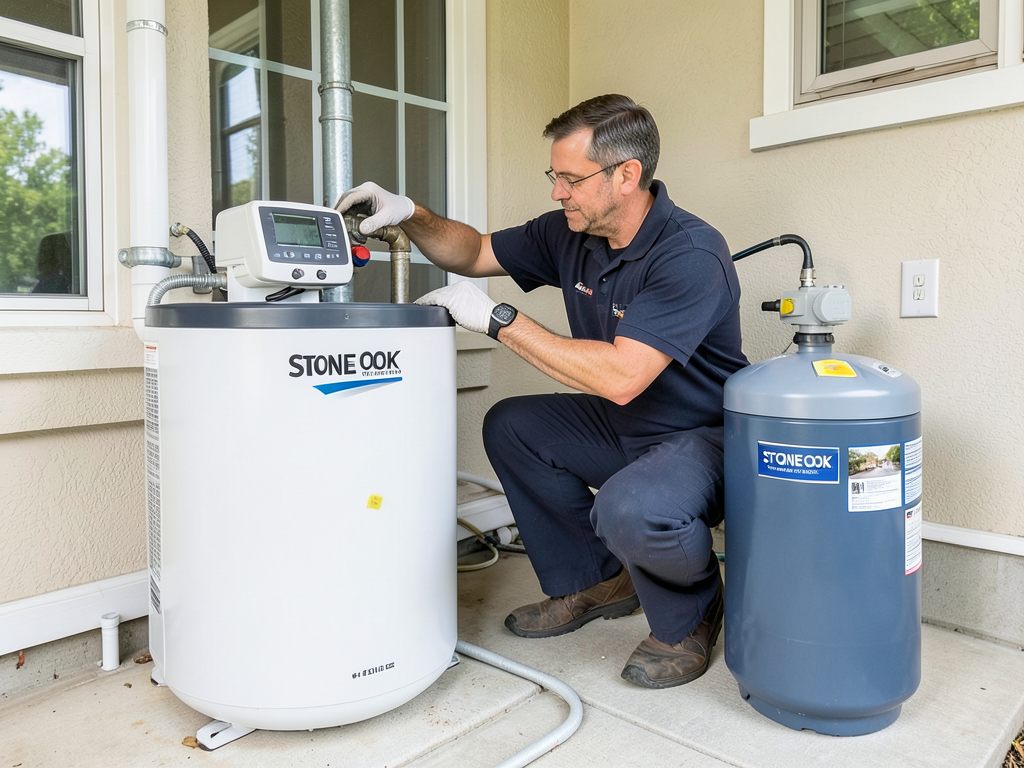
Dealing With the Hard Water That’s Ruining Stone Oak Appliances
If you live in Stone Oak, you already know the water here is brutal on your home. The Edwards Aquifer delivers some of the hardest water in Texas, with mineral levels that coat your fixtures, clog your pipes, and destroy your appliances. That white crusty buildup on your showerhead is calcium carbonate, and it is costing you money every single day. Texas State Board of Plumbing Examiners.
Stone Oak homeowners in the 78258 and 78260 zip codes face water hardness levels that regularly exceed 20 grains per gallon. That is more than double the threshold where most manufacturers consider water “very hard.” Your dishwasher, water heater, and washing machine are working overtime just to function, and they are not designed to last under this kind of constant mineral assault.
The good news is you do not have to accept this damage. A properly sized and installed water softener can stop the scale before it starts, protect your investment, and cut your utility bills. But here is the catch: not every system works in Stone Oak, and not every installer understands the local water chemistry or the San Antonio Water System (SAWS) requirements. San Antonio Water System regulations.
Alpha Plumbing has been solving hard water problems in Stone Oak since the neighborhood was built. We know the Edwards Aquifer source, we understand the SAWS regulations, and we install systems that actually work in this specific water chemistry. If you want to stop the damage, the first step is understanding what you are up against.
Why Stone Oak Homes Require High-Efficiency Water Softeners
The Edwards Aquifer is a blessing and a curse. It provides clean, reliable water, but it also delivers dissolved calcium and magnesium that create hard water. In Stone Oak, the water hardness often measures between 20 and 25 grains per gallon, which is considered extremely hard by national standards.
At these levels, scale builds up inside your pipes within months. Your water heater loses efficiency by up to 30 percent as the heating elements get coated. Dishwashers leave spots on glassware. Washing machines wear out five years early. Even your coffee maker gets clogged.
Standard softeners struggle here because the resin beds exhaust quickly when dealing with this mineral load. You need a high-efficiency system with a metered regeneration cycle that only cleans when necessary. Otherwise, you waste salt and water while still letting scale form.
Stone Oak also has unique plumbing layouts. Many homes have water softener loops installed during construction, but not all. If your home lacks a loop, the installation becomes more complex because you have to create a dedicated line for soft water while keeping hard water available for outdoor use.
The local soil adds another layer of complexity. Clay soil in northern San Antonio expands and contracts with moisture changes, which can shift underground pipes. If your softener drain line is not properly supported, ground movement can crack connections and cause leaks.
Our Stone Oak Installation Process
Every water softener installation in Stone Oak starts with a comprehensive water test. We measure hardness, pH, iron content, and total dissolved solids. This data determines the system size and configuration. A home with 25 GPG hardness needs a different resin capacity than one with 15 GPG.
Next we inspect your plumbing layout. If you have a softener loop, we verify its location and condition. If not, we map out the best route for new piping. The goal is to treat water for indoor use while leaving outdoor spigots on hard water to save salt and protect your landscape.
Drain line installation is critical. The softener backwash must flow to an approved drain, not your septic system. SAWS regulations require proper air gaps and backflow prevention. We install these exactly to code, which means no contamination risk and no failed inspections.
Once the hardware is in place, we calibrate the system. This includes setting the regeneration schedule based on your actual water usage and hardness level. We also test the bypass valve operation and verify that all connections are leak-free under pressure.
Finally we educate you on operation and maintenance. This includes checking salt levels, cleaning the brine tank annually, and recognizing when performance drops. Most homeowners can handle basic upkeep, but we are always available for service calls.
Choosing the Right System: Salt-Based vs. Salt-Free
Stone Oak water is too hard for most salt-free systems to work effectively. Those units rely on template-assisted crystallization, which works best under 15 GPG. Above that threshold, they cannot prevent scale formation consistently.
Salt-based ion exchange softeners remain the most reliable choice here. They actually remove calcium and magnesium, replacing them with sodium or potassium. This stops scale at the source and provides the soft water feel that most homeowners prefer.
The trade-off is salt usage and discharge. Modern high-efficiency units use far less salt than older models, and the discharge is not harmful when properly managed. SAWS allows softener discharge to the sanitary sewer, but not to storm drains or septic systems.
If you have specific health concerns about sodium, we can install a reverse osmosis system at your kitchen sink for drinking water. This removes the sodium added during softening while still protecting your plumbing and appliances.
Budget also matters. Basic units start around $1,500 installed, while premium systems with Wi-Fi monitoring and longer warranties run $3,000 to $4,000. The higher cost often pays for itself through appliance longevity and reduced energy use.
Local Compliance and Permits
San Antonio Water System has specific rules for water softener installations. You must connect to the sanitary sewer for backwash discharge, maintain proper air gaps, and prevent cross-connection between hard and soft water lines.
The City of San Antonio plumbing code requires permits for new water softener installations. This ensures the work meets current standards and passes inspection. Skipping permits can lead to fines and complications if you sell your home later.
Alpha Plumbing handles all permitting and inspection scheduling. We know the exact requirements for Stone Oak and surrounding areas, so you do not have to figure it out yourself.
We also follow Texas State Board of Plumbing Examiners (TSBPE) licensing requirements. Our technicians carry valid plumbing licenses, and we maintain proper insurance coverage. This protects you if anything goes wrong during installation.
Water conservation is another consideration. Modern softeners use demand-initiated regeneration, which means they only clean when needed based on actual water usage. This can reduce water consumption by up to 50 percent compared to older timer-based units.
Stone Oak Customer Reviews and Projects
We have installed water softeners in Stone Oak neighborhoods from The Vineyard to Champions Run. One recent project in the 78258 area involved replacing a 15-year-old unit that had completely lost its softening capacity. The homeowner noticed immediate improvements in soap lathering and appliance performance.
Another installation in the Sonterra area required creating a new softener loop in a home built without one. We routed the piping through the attic space to minimize disruption, then installed a high-efficiency unit that cut the family’s detergent usage by half.
Customers consistently report that their water heaters run more quietly after installation, their dishes come out spot-free, and their skin feels less dry after showers. These are the real-world benefits that make the investment worthwhile.
We also provide ongoing service for existing systems. This includes resin bed cleaning, valve rebuilds, and salt delivery for customers who prefer not to handle it themselves. Regular maintenance keeps your system working at peak efficiency for years.
Frequently Asked Questions
How long does installation take?
Most installations in Stone Oak take between 3 to 5 hours. If we need to create a new softener loop, it can extend to a full day. We always test the system thoroughly before leaving.
Will soft water damage my plants?
No. The sodium levels in softened water are not high enough to harm most plants. However, we recommend keeping outdoor spigots on hard water to conserve salt and avoid any potential issues with salt-sensitive plants.
How often do I need to add salt?
This depends on your water usage and hardness level. Most families in Stone Oak add salt every 6 to 8 weeks. High-efficiency units use less salt than older models, so you may find yourself refilling less often than expected.
Can I install a softener myself?
DIY installation is not recommended for several reasons. You need to comply with SAWS regulations, obtain permits, and ensure proper plumbing connections. Mistakes can lead to leaks, contamination, or system failure. Professional installation also maintains your warranty.
What maintenance does a softener need?
Basic maintenance includes checking salt levels monthly, cleaning the brine tank annually, and replacing the pre-filter if your system has one. We offer service plans that handle all maintenance for you, including resin bed cleaning every few years.
Is the sodium in soft water safe to drink?
The amount of sodium added during softening is minimal for most people. An 8-ounce glass contains less sodium than a slice of bread. If you are on a sodium-restricted diet, a reverse osmosis system can remove the sodium for drinking and cooking water.
How do I know if my softener is working?
Signs of proper operation include soft water feel, spot-free dishes, and efficient soap lathering. If you notice scale buildup returning or soap not lathering well, your system may need service or salt.
What happens if I move?
You can take your softener with you, but it often makes more sense to leave it for the new owners. We can uninstall and reinstall systems, though you may want to consider the age and condition before moving it.
Do I need a permit for installation?
Yes. The City of San Antonio requires permits for new water softener installations. This ensures the work meets code and passes inspection. We handle all permitting as part of our installation service.
How much does a water softener cost?
Prices vary based on system size and features. Basic units start around $1,500 installed, while premium systems with advanced features run $3,000 to $4,000. We provide detailed quotes after testing your water and assessing your plumbing.
Ready to Stop the Damage?
Hard water is not just an inconvenience in Stone Oak. It is actively destroying your appliances, wasting your money, and making your home less comfortable. Every month you wait, the scale builds up a little more, and the damage becomes a little worse.
Alpha Plumbing has the local expertise, the proper licensing, and the right equipment to solve your hard water problems for good. We know Stone Oak because we have worked here for years, and we understand exactly what your water is doing to your home.
Call (210) 374-7773 today to schedule your water test and get a free installation quote. Do not let another week go by watching your appliances suffer. Pick up the phone and call (210) 374-7773 before the next scale buildup ruins something expensive.
Your home deserves better water. Your appliances deserve protection. You deserve peace of mind. Call (210) 374-7773 and let us show you what properly treated water can do for your Stone Oak home.
{
“@context”: “https://schema.org”,
“@type”: “BlogPosting”,
“headline”: “Dealing With the Hard Water That’s Ruining Stone Oak Appliances”,
“description”: “Hard water from the Edwards Aquifer is damaging Stone Oak appliances. Learn how to protect your investment with professional water softener installation and local compliance.”,
“wordCount”: 1862,
“datePublished”: “2026-02-11T14:58:00.000Z”,
“dateModified”: “2026-02-11T14:58:00.000Z”,
“inLanguage”: “en-US”,
“mainEntityOfPage”: {
“@type”: “WebPage”,
“@id”: “https://alphaplumbingsanantonio.com”
},
“publisher”: {
“@type”: “LocalBusiness”,
“name”: “Alpha Plumbing San Antonio”,
“url”: “https://alphaplumbingsanantonio.com”
},
“author”: {
“@type”: “Organization”,
“name”: “Alpha Plumbing San Antonio”,
“url”: “https://alphaplumbingsanantonio.com”
},
“image”: {
“@type”: “ImageObject”,
“url”: “https://alphaplumbingsanantonio.com/wp-content/uploads/2026/03/dealing-with-the-hard-water-that-s-ruining-stone-o-1.png”
}
}
{
“@context”: “https://schema.org”,
“@type”: “Plumber”,
“name”: “Alpha Plumbing San Antonio”,
“url”: “https://alphaplumbingsanantonio.com”,
“address”: {
“@type”: “PostalAddress”,
“addressLocality”: “San Antonio”
},
“areaServed”: {
“@type”: “City”,
“name”: “San Antonio”
}
}
{
“@context”: “https://schema.org”,
“@type”: “FAQPage”,
“mainEntity”: [
{
“@type”: “Question”,
“name”: “How long does installation take?”,
“acceptedAnswer”: {
“@type”: “Answer”,
“text”: “Most installations in Stone Oak take between 3 to 5 hours. If we need to create a new softener loop, it can extend to a full day. We always test the system thoroughly before leaving.”
}
},
{
“@type”: “Question”,
“name”: “Will soft water damage my plants?”,
“acceptedAnswer”: {
“@type”: “Answer”,
“text”: “No. The sodium levels in softened water are not high enough to harm most plants. However, we recommend keeping outdoor spigots on hard water to conserve salt and avoid any potential issues with salt-sensitive plants.”
}
},
{
“@type”: “Question”,
“name”: “How often do I need to add salt?”,
“acceptedAnswer”: {
“@type”: “Answer”,
“text”: “This depends on your water usage and hardness level. Most families in Stone Oak add salt every 6 to 8 weeks. High-efficiency units use less salt than older models, so you may find yourself refilling less often than expected.”
}
},
{
“@type”: “Question”,
“name”: “Can I install a softener myself?”,
“acceptedAnswer”: {
“@type”: “Answer”,
“text”: “DIY installation is not recommended for several reasons. You need to comply with SAWS regulations, obtain permits, and ensure proper plumbing connections. Mistakes can lead to leaks, contamination, or system failure. Professional installation also maintains your warranty.”
}
},
{
“@type”: “Question”,
“name”: “What maintenance does a softener need?”,
“acceptedAnswer”: {
“@type”: “Answer”,
“text”: “Basic maintenance includes checking salt levels monthly, cleaning the brine tank annually, and replacing the pre-filter if your system has one. We offer service plans that handle all maintenance for you, including resin bed cleaning every few years.”
}
},
{
“@type”: “Question”,
“name”: “Is the sodium in soft water safe to drink?”,
“acceptedAnswer”: {
“@type”: “Answer”,
“text”: “The amount of sodium added during softening is minimal for most people. An 8-ounce glass contains less sodium than a slice of bread. If you are on a sodium-restricted diet, a reverse osmosis system can remove the sodium for drinking and cooking water.”
}
},
{
“@type”: “Question”,
“name”: “How do I know if my softener is working?”,
“acceptedAnswer”: {
“@type”: “Answer”,
“text”: “Signs of proper operation include soft water feel, spot-free dishes, and efficient soap lathering. If you notice scale buildup returning or soap not lathering well, your system may need service or salt.”
}
},
{
“@type”: “Question”,
“name”: “What happens if I move?”,
“acceptedAnswer”: {
“@type”: “Answer”,
“text”: “You can take your softener with you, but it often makes more sense to leave it for the new owners. We can uninstall and reinstall systems, though you may want to consider the age and condition before moving it.”
}
},
{
“@type”: “Question”,
“name”: “Do I need a permit for installation?”,
“acceptedAnswer”: {
“@type”: “Answer”,
“text”: “Yes. The City of San Antonio requires permits for new water softener installations. This ensures the work meets code and passes inspection. We handle all permitting as part of our installation service.”
}
},
{
“@type”: “Question”,
“name”: “How much does a water softener cost?”,
“acceptedAnswer”: {
“@type”: “Answer”,
“text”: “Prices vary based on system size and features. Basic units start around $1,500 installed, while premium systems with advanced features run $3,000 to $4,000. We provide detailed quotes after testing your water and assessing your plumbing.”
}
},
{
“@type”: “Question”,
“name”: “Ready to Stop the Damage?”,
“acceptedAnswer”: {
“@type”: “Answer”,
“text”: “Hard water is not just an inconvenience in Stone Oak. It is actively destroying your appliances, wasting your money, and making your home less comfortable. Every month you wait, the scale builds up a little more, and the damage becomes a little worse.”
}
}
]
}
{
“@context”: “https://schema.org”,
“@type”: “BreadcrumbList”,
“itemListElement”: [
{
“@type”: “ListItem”,
“position”: 1,
“name”: “Home”,
“item”: “https://alphaplumbingsanantonio.com”
},
{
“@type”: “ListItem”,
“position”: 2,
“name”: “Blog”,
“item”: “https://alphaplumbingsanantonio.com/blog”
},
{
“@type”: “ListItem”,
“position”: 3,
“name”: “Dealing With the Hard Water That’s Ruining Stone Oak Appliances”
}
]
}
{
“@context”: “https://schema.org”,
“@type”: “Service”,
“serviceType”: “Plumbing”,
“provider”: {
“@type”: “LocalBusiness”,
“name”: “Alpha Plumbing San Antonio”,
“url”: “https://alphaplumbingsanantonio.com”
},
“areaServed”: {
“@type”: “City”,
“name”: “San Antonio”
},
“description”: “Hard water from the Edwards Aquifer is damaging Stone Oak appliances. Learn how to protect your investment with professional water softener installation and local compliance.”
}