
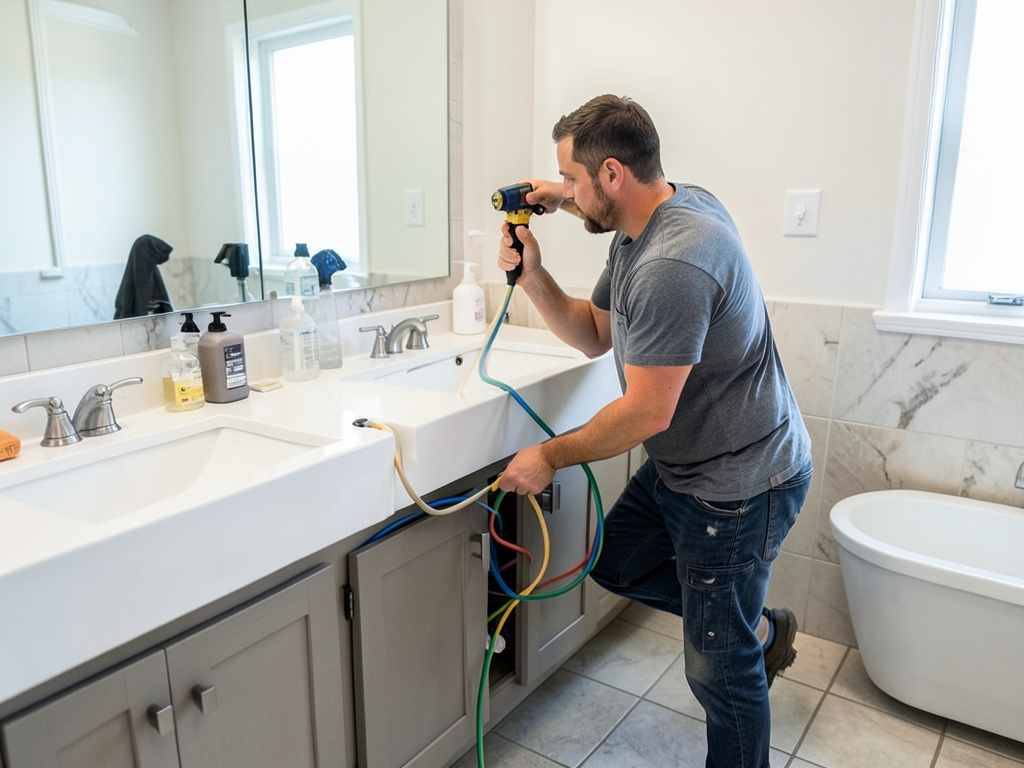
Double Vanity Plumbing Rough-In: A Complete Guide for Schertz Homeowners
Planning a master bath upgrade in Schertz means dealing with specific local conditions. The heavy clay soil in this area causes foundation movement that can shift plumbing over time. Water pressure here runs slightly higher than the national average due to SAWS infrastructure. These factors affect every measurement and material choice for your double vanity installation. Plumbing Boerne.
The first 100 words answer the core question. A double vanity requires precise rough-in work. Drain lines need 18 inches of vertical clearance from the finished floor. Supply lines install 4 inches to the left and right of the drain center. Vent pipes tie into the main stack within 6 feet of the farthest fixture. All work must meet San Antonio Development Services permit requirements before covering any walls. San Antonio Development Services.
Standard Rough-In Dimensions for Double Vanities
Getting the rough-in right means knowing exact measurements. The drain center sits 18 inches above the finished floor. This height works with most standard vanities and allows proper P-trap function. Supply lines mount 4 inches horizontally from the drain center at 20-22 inches above the floor. Getting a Clogged Drain Cleared Fast Near the San Antonio Medical Center.
The distance between sink centers typically measures 30-36 inches. This spacing gives comfortable elbow room and meets code requirements. Each sink needs its own P-trap with a 1.5-inch or 2-inch drain line depending on fixture load.
Key dimensions to mark on your wall:
- Drain center height: 18 inches
- Supply line offset: 4 inches from drain center
- Supply line height: 20-22 inches
- Sink center spacing: 30-36 inches
- P-trap arm length: 6-8 inches maximum
Drain and Venting Requirements: What Schertz Code Says
San Antonio follows the Uniform Plumbing Code with local amendments. The Schertz area requires 2-inch drain lines for double vanities due to fixture unit calculations. A single vent can serve both sinks if installed within 6 feet of the farthest fixture. Emergency San Antonio Plumbers Who Actually Answer the Phone at Night.
The vent connection uses a sanitary tee with a 1.5-inch branch for each sink. The main vent ties into the building drain with a minimum 2-inch pipe. All vents must maintain a 1/4 inch per foot upward slope toward the stack.
Local code section 305.4 requires cleanouts at every change of direction greater than 45 degrees. This means you need cleanouts where the vanity drain turns to meet the main stack. Missing these cleanouts causes inspection failures.
Supply Line Placement: Hot and Cold Water Specs
Supply lines for double vanities use 1/2-inch PEX or copper. PEX works better in Schertz due to soil movement. The flexible tubing handles foundation shifts without cracking. Copper lasts longer but needs more precise installation.
Each sink gets dedicated hot and cold lines. Install shut-off valves 2 inches above the finished floor. These valves allow future repairs without shutting off house water. The valve handles should face outward for easy access. Safe and Professional Gas Line Repairs for Hollywood Park Residents.
Water hammer arrestors prevent pipe banging when faucets close quickly. Install these devices on both hot and cold lines within 6 feet of each faucet. The arrestors absorb pressure spikes that could damage connections over time.
Common Challenges with Schertz Slab Foundations
Most Schertz homes use slab-on-grade construction. This foundation type creates specific plumbing challenges. The clay soil expands and contracts with moisture changes. This movement can crack rigid pipes or pull apart glued connections.. Read more about Understanding the plumbing labor rates and costs for projects in Inwood.
During rough-in, use flexible PEX for supply lines. The tubing moves with the slab instead of breaking. For drains, install cleanouts at every 90-degree turn. These access points let you clear blockages caused by foundation shifting.
Water pressure testing becomes critical before covering walls. Pressurize the system to 80 PSI and check for leaks over 15 minutes. Any drop indicates a problem that needs fixing before inspection.
Tools and Materials Checklist
Having the right tools prevents delays and mistakes. The rough-in process requires specific items for proper installation.
| Tool/Material | Purpose | Quantity |
|---|---|---|
| PEX tubing cutter | Clean cuts on PEX | 1 |
| Copper tubing cutter | Clean cuts on copper | 1 |
| Adjustable wrench | Connecting fittings | 2 |
| Level | Checking slopes | 1 |
| Stud finder | Locating framing | 1 |
| Measuring tape | Taking dimensions | 1 |
| P-trap kit | Connecting drains | 2 |
| Sanitary tees | Vent connections | 2 |
| Shut-off valves | Water control | 4 |
| Cleanout plugs | Access points | 4 |
Step-by-Step Rough-In Process
Following a systematic process prevents mistakes. Each step builds on the previous one. Missing a step means starting over or failing inspection.
- Mark Wall Layout
Measure and mark all drain and supply line locations on the wall. Use a level to ensure vertical accuracy. Double-check all measurements before cutting.
- Cut Access Holes
Drill 2-inch holes for drain lines and 1-inch holes for supply lines. Keep holes centered in stud bays when possible. Use a hole saw for clean edges.
- Install Drain Lines
Run 2-inch PVC from each sink to the main drain. Use sanitary tees for connections. Maintain 1/4 inch per foot slope toward the main stack.
- Add Vent Pipes
Install 1.5-inch vent lines from each sink. Connect to the main vent within 6 feet. Use proper fittings and maintain upward slope.
- Run Supply Lines
Install 1/2-inch PEX or copper to each sink location. Add shut-off valves at the end of each line. Secure lines every 4 feet with clips.
- Test the System
Pressurize with air to 80 PSI. Check for leaks over 15 minutes. Repair any issues before covering walls. How We Repair Sewer Lines in King William Without Destroying the History.
When to Call a Licensed Schertz Plumber
Some rough-in work needs professional expertise. Complex venting configurations, main stack connections, or permit navigation often require a licensed plumber.
If your home sits near the Edwards Aquifer recharge zone, additional environmental permits apply. These areas have stricter requirements for trenching and material disposal. A local plumber knows these specific rules.
Hard water in Schertz affects material choices. The high mineral content causes faster corrosion in copper pipes. PEX resists this damage better but requires different installation techniques. Professional plumbers understand these material interactions.
Call (210) 374-7773 if you need help with any rough-in step. We handle the technical details so your double vanity works perfectly for years.
Frequently Asked Questions
What size drain pipe do I need for a double vanity?
San Antonio code requires 2-inch drain lines for double vanities. This size handles the combined fixture units and prevents clogs. Single vanities can use 1.5-inch drains.
How far apart should double vanity sinks be?
Sink centers need 30-36 inches between them. This spacing provides comfortable use and meets code requirements. Measure from the center of one drain to the center of the other.
Do I need a permit for double vanity plumbing in Schertz?
Yes. Any new plumbing fixture installation requires a permit from San Antonio Development Services. The permit ensures work meets code and passes inspection before covering walls.
Can I use PEX for both supply and drain lines?
PEX works only for supply lines. Drain lines must use PVC or ABS plastic. PEX cannot handle waste water or maintain proper slope for drainage.
How high should the vanity drain be from the floor?
The drain center should be 18 inches above the finished floor. This height works with most vanities and allows proper P-trap installation. Supply lines mount 20-22 inches high. For more information, visit Texas State Board of Plumbing Examiners.
You may also find this helpful. Keeping the vintage charm of your Woodlawn Lake bathroom during repairs.
{
“@context”: “https://schema.org”,
“@type”: “BlogPosting”,
“headline”: “Expanding Your Master Bath with a Double Vanity in Schertz”,
“description”: “Learn the exact plumbing rough-in requirements for a double vanity in Schertz. Get code-compliant dimensions, venting specs, and permit info from a licensed San Antonio plumber.”,
“wordCount”: 1239,
“datePublished”: “2026-03-23T09:30:00.000Z”,
“dateModified”: “2026-03-23T09:30:00.000Z”,
“inLanguage”: “en-US”,
“mainEntityOfPage”: {
“@type”: “WebPage”,
“@id”: “https://alphaplumbingsanantonio.com”
},
“publisher”: {
“@type”: “LocalBusiness”,
“name”: “Alpha Plumbing San Antonio”,
“url”: “https://alphaplumbingsanantonio.com”
},
“author”: {
“@type”: “Organization”,
“name”: “Alpha Plumbing San Antonio”,
“url”: “https://alphaplumbingsanantonio.com”
},
“image”: {
“@type”: “ImageObject”,
“url”: “https://alphaplumbingsanantonio.com/wp-content/uploads/2026/03/expanding-your-master-bath-with-a-double-vanity-in-1.png”
}
}
{
“@context”: “https://schema.org”,
“@type”: “Plumber”,
“name”: “Alpha Plumbing San Antonio”,
“url”: “https://alphaplumbingsanantonio.com”,
“address”: {
“@type”: “PostalAddress”,
“addressLocality”: “San Antonio”
},
“areaServed”: {
“@type”: “City”,
“name”: “San Antonio”
}
}
{
“@context”: “https://schema.org”,
“@type”: “FAQPage”,
“mainEntity”: [
{
“@type”: “Question”,
“name”: “What size drain pipe do I need for a double vanity?”,
“acceptedAnswer”: {
“@type”: “Answer”,
“text”: “San Antonio code requires 2-inch drain lines for double vanities. This size handles the combined fixture units and prevents clogs. Single vanities can use 1.5-inch drains.”
}
},
{
“@type”: “Question”,
“name”: “How far apart should double vanity sinks be?”,
“acceptedAnswer”: {
“@type”: “Answer”,
“text”: “Sink centers need 30-36 inches between them. This spacing provides comfortable use and meets code requirements. Measure from the center of one drain to the center of the other.”
}
},
{
“@type”: “Question”,
“name”: “Do I need a permit for double vanity plumbing in Schertz?”,
“acceptedAnswer”: {
“@type”: “Answer”,
“text”: “Yes. Any new plumbing fixture installation requires a permit from San Antonio Development Services. The permit ensures work meets code and passes inspection before covering walls.”
}
},
{
“@type”: “Question”,
“name”: “Can I use PEX for both supply and drain lines?”,
“acceptedAnswer”: {
“@type”: “Answer”,
“text”: “PEX works only for supply lines. Drain lines must use PVC or ABS plastic. PEX cannot handle waste water or maintain proper slope for drainage.”
}
},
{
“@type”: “Question”,
“name”: “How high should the vanity drain be from the floor?”,
“acceptedAnswer”: {
“@type”: “Answer”,
“text”: “The drain center should be 18 inches above the finished floor. This height works with most vanities and allows proper P-trap installation. Supply lines mount 20-22 inches high. For more information, visit Texas State Board of Plumbing Examiners.”
}
}
]
}
{
“@context”: “https://schema.org”,
“@type”: “HowTo”,
“name”: “How to Rough-In Double Vanity Plumbing”,
“step”: [
{
“@type”: “HowToStep”,
“position”: 1,
“name”: “Mark Wall Layout”,
“text”: “Measure and mark all drain and supply line locations on the wall. Use a level to ensure vertical accuracy. Double-check all measurements before cutting.”
},
{
“@type”: “HowToStep”,
“position”: 2,
“name”: “Cut Access Holes”,
“text”: “Drill 2-inch holes for drain lines and 1-inch holes for supply lines. Keep holes centered in stud bays when possible. Use a hole saw for clean edges.”
},
{
“@type”: “HowToStep”,
“position”: 3,
“name”: “Install Drain Lines”,
“text”: “Run 2-inch PVC from each sink to the main drain. Use sanitary tees for connections. Maintain 1/4 inch per foot slope toward the main stack.”
},
{
“@type”: “HowToStep”,
“position”: 4,
“name”: “Add Vent Pipes”,
“text”: “Install 1.5-inch vent lines from each sink. Connect to the main vent within 6 feet. Use proper fittings and maintain upward slope.”
},
{
“@type”: “HowToStep”,
“position”: 5,
“name”: “Run Supply Lines”,
“text”: “Install 1/2-inch PEX or copper to each sink location. Add shut-off valves at the end of each line. Secure lines every 4 feet with clips.”
},
{
“@type”: “HowToStep”,
“position”: 6,
“name”: “Test the System”,
“text”: “Pressurize with air to 80 PSI. Check for leaks over 15 minutes. Repair any issues before covering walls. How We Repair Sewer Lines in King William Without Destroying the History.”
}
],
“image”: “https://alphaplumbingsanantonio.com/wp-content/uploads/2026/03/expanding-your-master-bath-with-a-double-vanity-in-1.png”
}
{
“@context”: “https://schema.org”,
“@type”: “BreadcrumbList”,
“itemListElement”: [
{
“@type”: “ListItem”,
“position”: 1,
“name”: “Home”,
“item”: “https://alphaplumbingsanantonio.com”
},
{
“@type”: “ListItem”,
“position”: 2,
“name”: “Blog”,
“item”: “https://alphaplumbingsanantonio.com/blog”
},
{
“@type”: “ListItem”,
“position”: 3,
“name”: “Expanding Your Master Bath with a Double Vanity in Schertz”
}
]
}
{
“@context”: “https://schema.org”,
“@type”: “Service”,
“serviceType”: “Plumbing”,
“provider”: {
“@type”: “LocalBusiness”,
“name”: “Alpha Plumbing San Antonio”,
“url”: “https://alphaplumbingsanantonio.com”
},
“areaServed”: {
“@type”: “City”,
“name”: “San Antonio”
},
“description”: “Learn the exact plumbing rough-in requirements for a double vanity in Schertz. Get code-compliant dimensions, venting specs, and permit info from a licensed San Antonio plumber.”
}